7 min read
Divide a Cast Iron Plant Along Its Rhizomes
Choose sections by their roots and growing points so a crowded Aspidistra can become two useful plants.
On this page
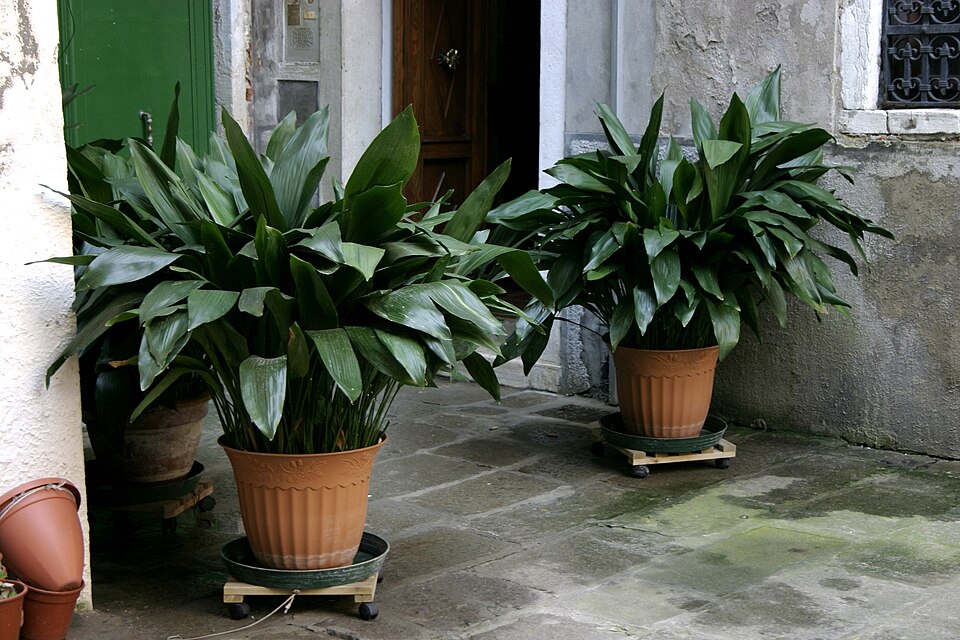
A large cast iron plant can look like a bundle of independent leaves, each standing on its own. Beneath the soil, those leaves are connected by a network of horizontal stems called rhizomes. That structure tells you where a division is possible. Pulling a handful of leaves from the rim gives no assurance that they have enough roots or a living growth point. Taking the plant out, finding a natural division in its rhizomes and keeping a useful amount of root on both sides gives you a much better basis for the cut.
Aspidistra elatior grows slowly enough that division makes sense only when you have a reason. A mature plant becomes awkward in a good pot, or you want to give a well rooted section its own container. A green plant can stay presentable for a time in lower light than many houseplants, so it is often used in places where a new division would take a while to settle. Set up the brighter of your suitable indoor positions for the weeks after the work. Give each piece time to grow into its eventual place.
Decide what two plants would do for the space
Look at the whole pot from several sides. If it has many firm leaves, new growth and room to water, it may be easier to leave it together. Some old leaves leaning over the rim are ordinary. Check whether the plant is hard to water because of its roots, or because a cover pot makes it difficult to reach the mix. A change of cover or location can solve a handling problem while keeping a mature plant intact.
If the rhizomes press visibly at one side and the plant dries unevenly, look for a natural break between groups of leaves. Take a photograph before lifting the plant. It will help you remember which group had younger growth and which side was closest to the window. Decide how many strong sections you need. Two generous pieces are easier to establish than several fragments that leave only one leaf on each. A modest division with its own growing point and roots may suit a second small pot without making the original plant look stripped.
Check when the plant usually produces new leaves in your home. A period when light and temperature support active growth is a useful time for division. In temperate indoor conditions, spring is often a convenient choice. Prepare the new containers and mix before taking the roots out. Do the work when you can give both pots attention afterward. A slow plant may show little above the soil for some time. Leaves that remain firm are a better early sign than immediate height.
Reveal the rhizomes without stripping all the roots
Water in advance if the mix is very dry and hard, giving the pot time to drain before the work. Lay out a clean surface with room for the leaves and root ball. Tip the plant and ease it free by supporting its base. Press or tap the sides if the pot allows. If roots are trapped in the drainage holes, free them carefully before pulling. A spreading clump can weigh more than expected when wet, so use a low stable surface and get assistance if you cannot turn it comfortably.
Use your fingers to lift away a little loose mix around a probable join. Start where the leaves seem to form two groups. Follow a firm horizontal rhizome from one group toward the other. Look for new buds, healthy root sections and leaves on either side. Keep most of the root mass intact, especially on the smaller piece. Washing away everything makes it easy to see each root, but also creates handling and drying stress. Expose what you need for the decision and leave the rest supported.
Set the clump down and assess the planned cut from two directions. If the small section holds several vigorous leaves and roots of its own, it may be a reasonable size. If the join runs close to the newest growth or reaches around the strongest roots, choose a larger section or postpone division. The roots that remain matter more than a perfectly even split. An old plant may divide readily into one substantial clump and one smaller offshoot. Both can look natural in appropriately sized pots.
Make one clean separation
Support the two sections while you make a clean cut through the connecting rhizome with a sharp clean tool. Separate roots by teasing them apart as much as practical. Move slowly rather than tearing against the cut. If a firm root crosses between the two pieces in a place you cannot untangle, make a controlled cut and keep enough roots with both. Trim damaged and clearly dead tissue if needed. Clean your tool and work surface, especially if you uncovered any decayed section while inspecting the center.
Put each division in a pot suited to its remaining root ball. Check that it has working drainage. A wide shallow division may be easier to accommodate in a container that offers space sideways, provided it is deep enough for the attached roots. Choose a loose container mix that holds some moisture while letting excess water escape. Set the rhizome and leaf bases at their previous level. Avoid piling a mound of wet mix over the section just to fill a larger container. Leave room to water at the rim and firm the mix gently.
Give the root area a thorough watering and let the excess drain. Correct any large shift in depth now while you can lift a section without disturbing new roots. A few older leaves may angle outward from a newly planted pot. If the entire plant rocks at the base, check whether it has a good fit in the container. You can steady it while the next roots anchor, leaving the leaf stalks room. Do not try to pull the leaves upright just by packing the mix hard around the base.
If the clump contains a variegated form, check the new leaves before deciding which part you want to keep. The regular pattern belongs in the description on the label. A shoot that has become entirely green is a poor starting point for a division you intend to grow for patterned foliage. Keep the label with the appropriate part and give it enough diffuse light. When dividing a plant for a friend, mark the original depth on the outside of the temporary pot, explain how slowly it grows, and send it with a firm root ball. It is easier to share one sound, well established division than several recently cut pieces whose growth is hard to judge.
Keep the first changes easy to interpret
Put the new pots in bright indirect light with no strong afternoon sun. The larger original section may dry sooner than the small one, even when they sit next to each other. Feel the mix at the edge near the roots and lift the pot before deciding to water. Give both time to dry to a reasonable degree between thorough waterings and clear the runoff each time. A small division in a large volume of new mix can stay wet at the bottom long after the surface looks dry. Keep an eye on the lower part of the pot, especially in cooler conditions.
Avoid moving both pieces from bright to very dim positions at once. After they settle, shift one to its planned place gradually and check its response. Low-light tolerance is helpful in a room, but a plant will generally use water and grow more slowly where it receives less light. Check the spot from leaf height, particularly during the darker season. A corner that has a borrowed view of the window for a small part of the day may still be brighter than one hidden behind furniture.
Watch the leaf bases and note the first new spear on each piece. Some old leaf edges can remain brown or damaged. Use fresh growth to judge whether the division is adapting. If several leaf bases soften and the mix stays wet, inspect sooner, before changing fertilizer or cutting back the canopy. If the leaves stay firm but little changes for several weeks, check light and season and give the slow rhizome time. Marking one healthy leaf at the outset gives you a stable comparison.
Use the space the new pots opened up
Return to the original reason for making the division. If you wanted to make watering less awkward, test the finished placements while carrying the can and removing the saucer. If you wanted a second plant for a particular corner, look at it there before the pot gets heavy. A suitable pot should leave enough space to turn the leaves away from traffic and enough access to see the new shoots. The strongest reason to keep an Aspidistra is that its leaves suit a useful place over several years. Leave both rhizomes room to make that next set of leaves before you plan another division.
Further reading: NC State Extension profile of Aspidistra elatior.