7 min read
Fit a Saskatoon Serviceberry Into a Small Garden
Measure for the mature shrub and leave room to notice the ripe fruit before it disappears into the foliage.
On this page
The easiest time to make room around a serviceberry is before planting. A little shrub fits between a path and another plant in spring, but the difference between an upright four-foot spread and a broad eight-foot spread will matter on every walk past it later. Try to imagine the ripe berries hanging well inside the leafy outline. You should have enough space to see them, reach into a few branches and check the base of the shrub without leaning over something sharp or trampling the bed.
Saskatoon serviceberry, Amelanchier alnifolia, is a deciduous shrub native to much of western and central North America. It carries clusters of white flowers in spring and dark purplish fruit later in the season. Many selections also color in fall. Individual shrubs vary widely in height, shape, fruiting and suckering, even within the species. The right one for a small garden can provide several different views across the year without eventually taking over the route beside it.
Compare real mature dimensions
Start with the open width you can spare. Measure across from the path to the permanent planting behind the proposed site. If walking space is limited, reserve it on the ground before calculating how much of the strip the shrub can occupy. Give yourself room to pass after rain, when heavy leaves or stems may lean a little. A branch can also be wider at chest height than the base suggests. Place tall markers at the outer edges of the expected spread and move past them from both directions.
Look at the height from the normal views into the garden. An upright selection can be a reasonable fit beside a fence or at the end of a path. A broad rounded shrub may work better against a low background because you can look over its top. Minnesota Extension lists the rounded cultivar 'Regent' at about six feet tall and eight feet wide in its regional guide. The upright selection sold as Standing Ovation is listed at about fifteen feet tall and four feet wide. Those figures illustrate the difference form can make. Local specimens and nursery descriptions are more useful for placing the actual plant you buy.
Consider where the shadows will go. A tall narrow plant can shade a small bed at an inconvenient time of day. A wide lower plant can block the view around a turn even if it casts only a short shadow. Stand near the path with a stake at the expected top and look beyond it. Mark the highest stems you want to maintain rather than expecting yearly trimming to change the entire natural habit. You will have more options once you choose a shrub whose usual size already suits the site.
Check a label for the botanical name before buying. Many plants called serviceberry are different Amelanchier species and hybrids. Some grow into small trees. A shopper looking only for spring flowers can come home with a plant much taller than a Saskatoon selection intended for a small fruiting garden. Ask whether the stock is expected to grow as several stems or has already been trained to a trunk, and whether it is bred mainly for fruit, form or other use.
Examine the root area before setting the shrub
In the wild, Saskatoon serviceberry occurs across varied sites. For garden use, provide sun or some light shade and a root area that holds useful moisture without staying waterlogged. A setting with good sun often supports strong flowering and fruiting. Where afternoons run hot and dry, some shelter and a reliable way to water may be more important than an extra hour of direct sun. Compare your site with local growing advice rather than assuming one position works in all areas where the plant is hardy.
Check where rain goes when it hits the nearby path, wall or roof. A narrow strip beside paving can be very dry in the shadow of a roof and too wet in the corner where a drain empties. Use a spade to look a little below the surface. A layer of soft topsoil can hide a tight lower layer, and its condition after rain will affect the future roots. If water repeatedly stands around the proposed stem base, choose an area with better drainage before making the planting hole.
When planting, set the shrub at a level that keeps the top of its root system at the surrounding ground and water it thoroughly. Avoid piling soil or mulch against the stems. A light layer of surface mulch beyond the base can help slow drying and leave a clear working area. During establishment, check the original nursery mix and the garden soil beside it. One can dry much sooner than the other. Water deeply as needed and adapt the interval as the roots spread and the weather changes.
Choose which stems and suckers to keep
The natural shape of a Saskatoon serviceberry often includes several stems. New shoots can also come up from underground growth. These can be an advantage if you want the plant to develop into a loose screen. Look for stems growing outside the planned width, especially on the path side. Deal with unwanted growth while it is small and you can distinguish where it emerges. Keep the central stems that give the plant its intended shape.
Inspect the shrub while it is dormant if you need to see the full framework. Look for dead stems, damage and places where two branches rub. Use clean tools and remove stems selectively. Leaving open spaces between stems can make it easier to inspect leaves and see ripe fruit. Repeatedly clipping all tips to the same level reduces the light, layered effect and takes away some branches that would otherwise flower. Before removing healthy flowering wood, refer to local guidance for the right timing and your aim, whether display or fruit.
Check how the shrub sits among neighboring plants during the first several growing seasons. A vigorous sucker just outside the boundary may be easy to deal with today and difficult to remove next year after its stems expand. Set a removable marker along the intended edge if it helps. If you want a naturally spreading specimen, put the marker farther back than the nursery pot led you to expect. The space visible in late winter gives you a better comparison between seasons than the outer line of flexible summer leaves.
Make a place to see and pick the fruit
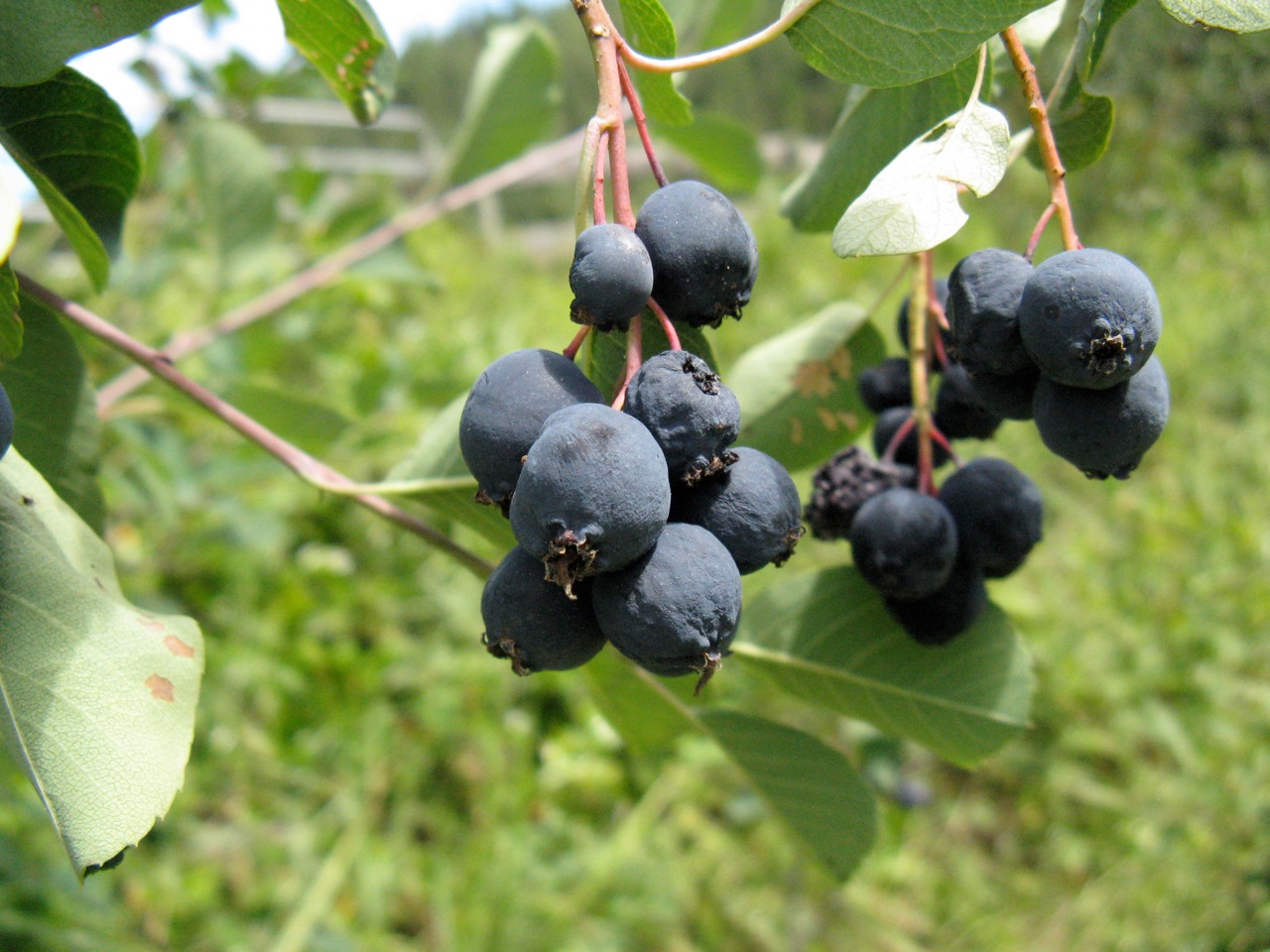
Flowers are an early opportunity to look over the shrub from all sides. Take note of where clusters develop and whether one part receives substantially more light. Later, look for round fruits turning from reddish shades to darker purple. The cover shows fully colored fruit on red stems. If you are growing a verified, correctly identified edible cultivar and plan to harvest, compare a few sound fruits from different branches as the crop ripens. Color helps, though the exact hue and timing depend on the cultivar and conditions.
Birds often find ripe serviceberries quickly. Check the fruit regularly if you want to pick some and allow some accessible clusters to stay for wildlife. When choosing the next plant for a mixed border, leave room for an arm between its mature foliage and the serviceberry. Long loppers are an awkward way to reach fruit across a narrow ornamental bed. A little clear ground under the branch can also make it easier to see where to step.
Where people walk over light paving, check where ripe fruit drops or birds perch after feeding. A branch held above a mulched bed may make cleanup easier than one stretched right over the threshold. Allow room for some of those lower branches on the garden side so the shrub still has its open shape. If you can approach from that side as well, you can leave the berries over the path alone until they are easy to reach.
Check unusual marks before treating a nursery plant. Rust conditions on serviceberry can show orange growth around fruit or lesions on leaves. Several other leaf or fruit problems can affect the genus. Take clear pictures and ask local extension or a plant clinic if symptoms repeat. Keep diseased or damaged fruit out of any harvest. The source of a problem can depend on the local area and neighboring plants, so follow local guidance instead of spraying by habit.
Return to the original measurements
In autumn, view the mature outline without the spring stake and decide whether the chosen space still works. Is there enough room to walk by when the foliage is open? Can you see the inner fruit clusters? Does it leave one part of the next bed in prolonged shade? If there is trouble, mark the actual stems responsible and address them selectively. Adjusting nearby low planting or the beginning of a path can sometimes solve a problem without regularly cutting the shrub short.
Use those notes to guide what you do the next spring. A shrub doing well can keep increasing in visible size after its first few years. Leave enough space to see that development before buying another plant to fill an early gap. If you chose it for its spring flowers, look again at the ripened fruit and autumn foliage from the same position. A well-placed Saskatoon serviceberry earns that small piece of garden in different ways as the season changes.
Further reading: University of Minnesota Extension guide to serviceberry species and cultivars.