7 min read
Give One Fruiting Quince a Sheltered Place to Ripen
Choose a cultivar and rootstock for the available space, then use color, aroma and the forecast to plan the first picking.
On this page
A quince tree can keep its fruit in view for weeks before you want to pick it. In late summer each piece may still look green and hard. Much later a fruit can turn gold and smell noticeably of quince while the nights grow colder. A site that offers useful light and shelter gives you a better chance of seeing that change. Plan for the mature tree and the autumn fruit before settling for an empty corner. Then you can use the first crop to learn how ripening and weather fit together in your garden.
Common or fruiting quince is Cydonia oblonga. Shrubs sold as flowering quince generally belong to Chaenomeles. If your main purpose is a crop of dessert or preserving fruit, ask for a named fruiting cultivar of Cydonia and find out which rootstock it is on. A single self-fertile cultivar can produce fruit where conditions suit it. The labeled tree gives you useful information about likely mature size, fruit development and the space between the planting point and the nearest path. The species alone tells you little about the height of the particular tree you take home.
Use the room required by the entire tree
Compare a sunny sheltered spot with the corner you have available by default. Many quince trees can grow to roughly three to four and a half meters in suitable conditions, and rootstock, cultivar and training affect that dimension. Ask the nursery for the actual expected size. Mark a mature width on the ground and look at the height from the point where you intend to pick. Leave room to approach the fruit safely and room for air around the branches. A tiny opening can seem appropriate while a tree is bare and become too enclosed once it has flowered.
Watch the position of the morning sun in spring and where cold air may collect. Later frost can damage flowers. A low pocket where frost sits longer is a risk, even within a garden that usually has mild autumns. In cool climates, consider a well lit sheltered position that allows fruit to ripen later in the year. Avoid putting the tree so close to a structure that fruit is hard to reach or branches continually rub against it. Keep space for roots and ordinary care as well as the warmer microclimate that may make the site appealing.
Set a stake or marker where you might stand to collect fruit. If one large branch would extend over a driveway, a walkway or a crowded planting, consider a different tree size or a move in the starting position. You want to visit the tree regularly when the fruit is near maturity. Leave safe ground under the lowest useful branches, and select a position in which neither a basket nor a person will have to fit between the trunk and a wall.
Keep the root zone useful through establishment
Plant in workable ground at an appropriate time. Bare-root trees are normally planted when dormant, with roots kept from drying during handling. Follow nursery and regional guidance for depth, staking and the planting opening. Keep the root flare and graft union at suitable levels, with roots spreading comfortably instead of tightly curling in one narrow hole. If the ground is seriously compacted or usually waterlogged, address that from the start or choose a different site. A deep isolated hole filled with softer soil does not necessarily improve the drainage of the whole area.
Water thoroughly after planting and during establishment according to soil and rainfall. Give the young roots reasonably even moisture and let excess water leave. Keep nearby growth from choking the stem and leave any mulch clear of the trunk. Note where rain and irrigation actually land. A young tree by a wall may receive less rain at its base than an open garden nearby. Check the soil at root depth before extending the irrigation schedule. A single soaked surface can conceal a dry lower zone.
Prune with a practical purpose. Remove damaged or poorly placed branches appropriately and keep a framework with useful space. A well positioned tree may need only light work to maintain an accessible shape. Avoid removing productive wood simply to keep a narrow silhouette that does not fit the cultivar. Look at the foliage in wet periods for repeated spotting or decline and use regional guidance to identify problems such as quince leaf blight before changing care. Leaf spots on one tree or one photograph cannot diagnose a causal disease.
Keep a record from blossom to mature fruit
In the first flowering years, note when flowers open and whether frost or other harsh conditions follow. A tree can grow well and still have a sparse first crop. Compare the amount of sound fruit in several positions before deciding that it needs another planting or stronger feeding. A site can meet all its needs except the timing of a cold spring. Keep care appropriate and allow an established tree time to reach useful fruiting size for its cultivar. New healthy growth is an important part of that result.
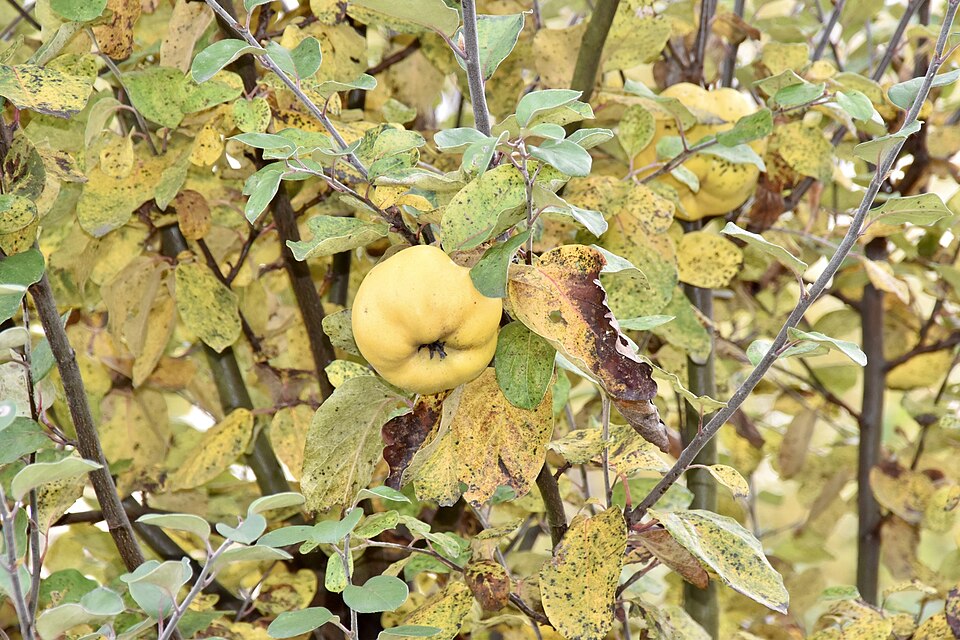
As autumn approaches, watch a few representative fruits. Choose one on a sunny outer branch and one in a slightly more sheltered part of the tree. Note how the background color changes and whether the skin begins to look gold. Smell a sound fruit when it is easy to reach. A strong characteristic aroma combined with the cultivar's expected color can indicate useful maturity. Individual fruits may develop at different rates. Follow a reliable growing reference for the variety rather than treating one yellow patch as a universal signal.
Check the forecast as the crop nears this stage. Choose a date before damaging frost, accounting for your particular position. A warm autumn may let more fruit develop on the tree; in another year the useful harvest window can close earlier. Avoid copying a region's named harvest month into a climate with a different frost season. Use the fruit and the forecast together. A simple note of the first gold color and the date of the first cold prediction can help you make this choice in later years.
Check the season from more than one branch
Use a small paper record with the date and the conditions for two or three fruit checks. Write down the side of the tree, the degree of color you see and the first clear aroma from a fruit you can reach. If the colder side is still green, review the forecast rather than harvesting every fruit with the first colored one. On a cultivar that ripens on schedule, leaving a small sound group for another visit can show how rapidly the change takes place. Keep that experiment modest if a frost is approaching.
When you make the first cut indoors, note the condition of the flesh and whether the aroma matched what you noticed outside. An apparently yellow fruit can have damage you could not see and an aromatic intact one can still vary in texture by cultivar. Keep the information beside the name of the tree. The dates and the fruit quality matter together when deciding whether the same sheltered spot suits a future planting. A young tree's first small crop gives you enough evidence to plan the next search for ripe fruit without judging its full yield.
Handle a hard fruit gently
A mature quince often remains hard enough to feel tough compared with other fruits. That does not make it resistant to bruising. Support it while picking and set it into a shallow container rather than dropping it onto a pile. Keep damaged fruit separate and use only sound material for food according to normal produce handling. Examine what you bring indoors after the first pick. If a rough spot on a branch is marking several fruits in the same place, consider how that branch might be managed in the appropriate pruning period.
Traditional quince varieties can be firm and astringent raw and are usually cooked. Cultivars differ. Use properly identified, sound mature fruit, and discard cores and seeds while preparing it. If your cultivar benefits from a short period of storage before use, follow reliable local guidance and inspect fruit for spoilage. The aroma that makes the crop useful can also be a reason to keep a small test lot apart from other produce. Record how your first sound fruit performed in the use you planned.
Choose the next change after a usable harvest
Look back at the first crop rather than the ideal shape of the tree on the plant tag. If the nearest fruits matured and were easy to collect, keep the access and give healthy growth room. If nothing seemed to reach good maturity before cold, compare the position and cultivar with local recommendations before committing to another tree. Where most fruit was good but very high, choose a practical framework or a smaller form for a future site. A single quince is enough for this experiment. Its worth comes from fruit given enough light and time, and collected while you can still enjoy what the season produced.
Further reading: Royal Horticultural Society guide to fruiting quince.