7 min read
Use Switchgrass to Screen a Garden Without Crowding It
Measure for a mature switchgrass clump, then decide how much summer cover and winter structure your garden needs.
On this page
A row of switchgrass can obscure a view of the bins in late summer without making the whole garden feel fenced in. Its leaves rise into a solid enough mass to interrupt the view, while the flower stems show light between them. In winter the plant dries to a tangle of upright stems and fine seed heads. The row behaves differently again in spring, when last year's stems come down and the new leaves have barely started. Those changes are more manageable if you plan around the view you want to address and the weeks in which it bothers you.
Panicum virgatum is a North American warm season grass. Its garden cultivars vary considerably in stature and form. 'Dallas Blues' is a broad selection with blue foliage and seed heads held above the leaves. Another cultivar may hold its blades closer together and rise nearly vertically. Read the name and dimensions on the label. The most useful plant for the space may be the one that leaves enough of your garden open when it is fully grown.
Find out how much of the view needs screening
Sit where you most often notice what you want to screen. It might be a chair, a kitchen window, or the doorstep where you put on your shoes. Set two bamboo canes where the first grass could go. Mark them at the heights of the expected foliage and flower stems and stand back again. A view from a raised window needs a different solution from the same view across a terrace. You may want to soften the center of it without obscuring a gate, encroaching on a path, or removing light from a window.
Try a single clump before marking a continuous row. Closing one diagonal view can take a surprisingly short planting strip. Leave a break where you need to reach a hose spigot or walk around the fence. Along a narrow side yard, a row with the wrong width proves more troublesome than a single clump in a slightly different position. Look at the scene from the other side, too. A tall grass that reads as a soft screen from the terrace may obscure a turn in a path if planted too close to it.
Assume the screen changes with the seasons. Last year's shafts may stand well through a calm winter. After heavy snow they may bend or flatten. New spring leaves generally come late compared with many other perennials. If the view must stay screened while the grass is short, a low fence, the background wall, or a shrub can take on that part of the job. Put the switchgrass where its active season is useful and where the spring opening can give a different plant its turn.
Check the width shown on the nursery tag
Tall grass looks narrow in a new nursery pot. Consider the width of the leaves and the width across the flower stems after rain or a breeze. A curved stem can swing well out from its base. 'Northwind' is an upright selection and makes a reasonable starting point near limited space. A fuller plant such as 'Dallas Blues' works better where you can give each clump room to arch. Wisconsin Extension gives examples of mature forms and notes that variety affects the eventual size. Compare those descriptions with the dimensions of the stock available in your region.
Draw the planting as circles rather than dots. Measure from the base of the plant to the nearest path edge, fence, and permanent neighboring shrub. You should be able to reach the grass from at least one side once those plants fill in. To preserve a crisp line along paving, leave some air between the suggested maximum leaf spread and the path. Give more clearance alongside wet slopes, stairs, or places where someone might have to pass carrying something large.
When several clumps need to read together, keep their centers a roughly consistent distance apart while accounting for irregular edges. An intentionally shorter group in front of a busy background can draw the eye more effectively than a row of many kinds of grasses. If a collection of pots has to move first, keep those plants visible while you mark the grass circles. A temporary nursery pot can easily take up a place that looked vacant when marked on paper.
Choose light and drainage before buying
Stand at the proposed site on an ordinarily bright day and watch how a tree or building shades it from morning until afternoon. Switchgrass generally grows more tightly in full sun. It can tolerate some shade but may splay outward, especially where a tall neighbor leans over it. Heavy nitrogen feeding can also encourage soft growth. If plants in that strip have been collapsing every year, test the available light and look at the soil before assuming a taller cultivar will stand up better.
The species prefers moist soil and is adaptable across quite different sites. A planting beside a regularly irrigated vegetable bed will experience another pattern of growth from a strip of sandy ground along the drive. If the bed lies next to a paved surface, check where water drains after a hard rain. Keep the immediate root area from drying repeatedly while the grass establishes. Extreme summer dryness calls for more attention while the roots are small, even in a spot where a mature clump might tolerate it.
A garden selection and a plant chosen for restoration can serve different purposes. If the project joins a managed prairie or another sensitive area, follow its advice about regionally suitable seed or plants. Along an ordinary garden edge, ask a local nursery which forms have remained upright and healthy there. Buy enough to make a modest first group, especially if the space or your site conditions are hard to judge. You can make a clearer decision about the second half of a row after watching the first plants through two seasons.
Keep the first season simple
Water nursery pots before planting if their root balls feel dry. Set the crown at approximately its previous level and settle the surrounding soil with water. The original potting mix can drain or dry at a different rate from the ground around it. In the following weeks, touch the soil on both sides of that boundary. If a small dark patch is all that gets wet, water more slowly around the root ball so moisture reaches nearby ground.
Control weeds early, while there is still an open gap around the grass. A light surface mulch outside the crown can slow moisture loss and make seedlings easier to identify. Keep the tag where you can find it through summer growth. A small marker on the hard edge of a path is sometimes easier to locate than a label buried between the blades. If you planted two cultivars to compare them, keep a simple sketch with their locations. Their spring shoots may look quite similar.
Expect a nursery plant to take time to fill its allotted space. During the first season, use open ground or low temporary fillers instead of moving the grass closer together. Keep the area around the base easy to inspect. A taller annual put in front as a quick screen could rob the little clump of light at the moment when its leaves are making their first strong growth. When the grass begins to make tall stems, view it when those stems are dry and again after a rain. The latter shows how much room the planting truly needs.
Watch the flowers and plan the winter cleanup
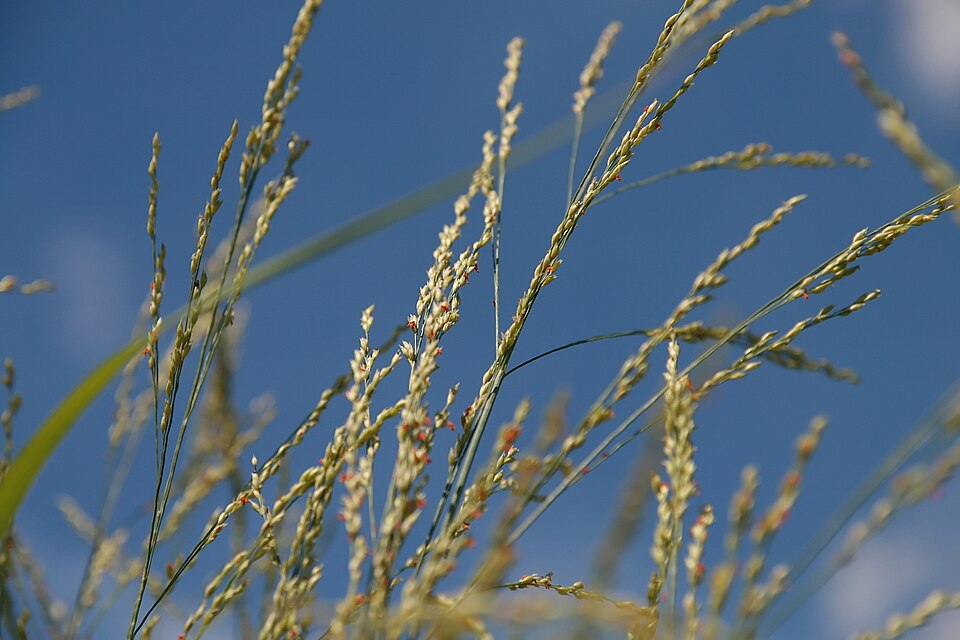
Summer panicles form above the leaves and can show a soft misty outline at a distance. Try seeing them with a dark hedge behind or with sunlight coming through them from the far side. Neither effect needs a large row. An extra grass in the wrong place may interrupt the view you like. Check the space between the clumps when you see the first seed stalks and mark any touching neighbor for attention during the right transplant season.
You can leave strong dry stems for winter form if they stand clear of traffic. Clip the panicles earlier if seedlings would be a problem or you do not want them reaching adjoining ground. Plan to clear old stems in late winter or early spring before new stems extend. The Wisconsin Extension guide recommends cutting to a few inches above the soil. Gather a section with gloved hands, cut it close to the base and put it aside before moving to the next. Working with separate bundles keeps cut stems from disappearing into the neighboring plants.
After cleanup, divide attention between what you see and what the grass is doing. Brown at the base in early spring is expected for a warm season grass. Look for fresh leaves as conditions warm instead of digging the clump up early. If a mature planting has encroached, mark exactly which bases are too close and decide whether to shift a clump during suitable growing conditions. Taking a photograph from the seat or window where you first placed the markers gives you a direct comparison. You can see whether you covered the intended view, how much of the garden still feels open, and where a little more growth would actually help.
Further reading: University of Wisconsin Extension profile of switchgrass.