7 min read
Give American Elderberry Room to Arch
Place a flowering elderberry behind a low border and renew just enough of its canes to keep the planting open.
On this page
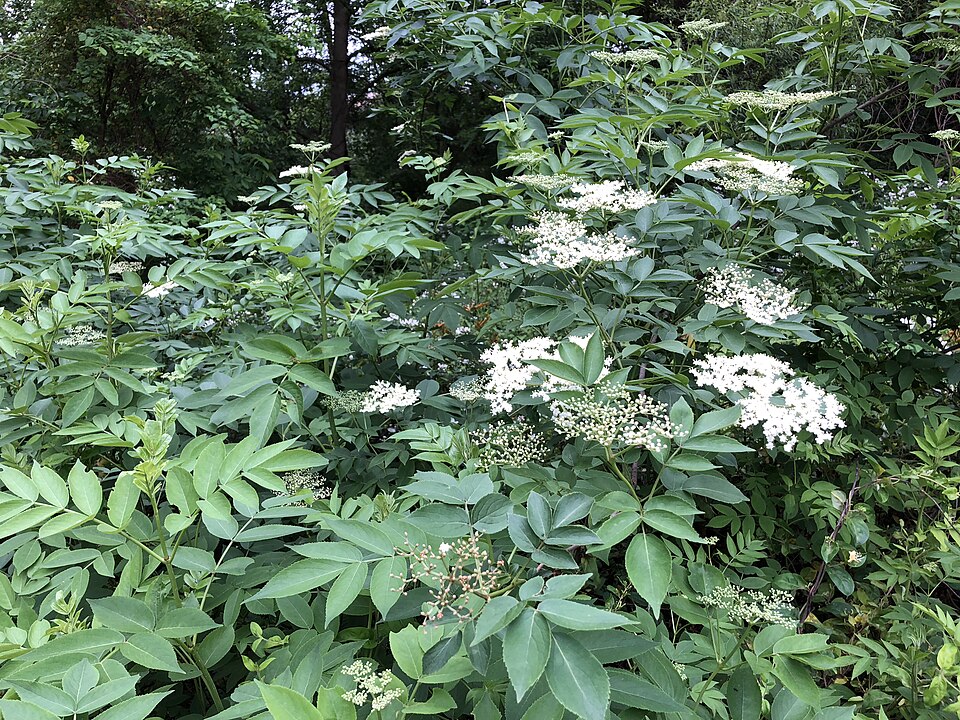
A flowering American elderberry is at its best viewed from a few steps away. An outer cane bends and takes several heads with it. Behind those flowers, fresh upright stems show where growth is likely to appear next year. An informal border can make use of that shape. A narrow walkway, an entrance, or a carefully clipped line is harder to share with a shrub that puts out fresh canes and suckers wherever it finds space. Place it with the eventual arch in mind and be prepared to edit the base occasionally.
American elderberry, Sambucus canadensis, is a deciduous shrub with several stems and compound leaves. Some labels show it as Sambucus nigra subsp. canadensis. The white summer flower clusters are followed by drooping dark fruits that many birds may visit. European elderberry and its purple garden forms have related features but are different plants. Choose the species and variety by label and according to regional planting guidance. This guide uses the American species as a backdrop for its flowers and seasonal shape.
Stand where the arch will be visible
Look for a low foreground and some depth behind it. A gap beyond two shorter plants lets you see a group of white flowering stems against their leaves. You might also place the elderberry just past the end of an ordinary mixed border so it extends the planting around a corner. NC State describes American elderberry as often wider than it is tall. Even a selection that stays within a moderate height can need a large outer margin, so ask about both dimensions before buying.
A nursery container gives a poor impression of the size of a mature cane. Set an upright stick roughly where the top growth may reach and lay another at ground level from the trunk area toward the nearest route. Allow for branches to move under rain and wind. A tall plant with room to bow down over a bed can make a good soft edge. The same plant directly over a narrow path may require frequent pruning of budded or flowering growth. A shorter cultivar or deeper planting position is easier to maintain.
Keep it away from children's play or pet activity areas where parts of the shrub might be handled or mouthed. Leaves, stems and other parts may be harmful if eaten, and the fruits are for display and wildlife in this planting. A site beyond the low front border lets you see the flowers without putting the fruit clusters beside a bench or doorway. If berries begin hanging across a section you need to use, either cut the encroaching branches or give the shrub more room when the season suits moving the planting.
Choose the ground to suit the root system
American elderberry tolerates a range of conditions and often does well in moist soil with sun or partial shade. Look for deep enough soil to hold moisture without keeping a new plant's roots in stagnant water. A bright position generally supports abundant flowers. Along the edge of a large tree's canopy, check the soil in a dry spell to see whether the overstory is taking most of the available water. A spot with more reliable moisture may be just a few feet farther into the open.
Observe the site shortly after rain. Think about where your feet will go through the first couple of seasons of establishment. A shrub at the rear of a damp bed can be hard to reach when the foreground is wet or slippery. A small walkway beside it, or a clear route across drier ground, makes it easier to inspect the lower canes. It is also a practical place to work from when you have to clear a broken stem after snow.
Prepare the planting hole in suitable weather. Put the root ball in at the depth it was growing, backfill without adding a mound against the canes, and water deeply. Check the original mix and nearby soil separately for moisture at first. A little loose mulch can lower water loss at the surface. Leave room to see where the stems leave the soil. Elderberry roots may be shallow, so avoid regular deep digging around the shrub once it is established. Hand weeding near the crown provides better control of what is being disturbed.
Learn the outline before it forms a thicket
Let the young root system settle before making large cuts. As new stems come up, see which ones naturally extend the back of the planting and which cross toward the path. An upright young cane at the front may become the branch that hangs over the flowers below. You can keep enough to form a round outline, while removing a few root suckers that emerge beyond it. A small stem at the outer edge is much easier to inspect and deal with than a wide branch three years later.
Suckers and new growth within an established crown can look similar early in the season. The position is often the most useful distinction for an ornamental planting. Keep stems within the area where you want the plant to thicken and remove those growing in another plant's space. Use a shallow hand tool and check what it is pulling on before removing an outer section. Cutting the tips off a shoot leaves the underlying root able to send up new growth. Check the same spot again later if it continues to produce suckers.
Give a spreading shrub an outer line you can locate without a measuring tape. A low front edge, stepping stone or change from soil to mulch can work. A woody plant beside a fence may spread in the direction you least often see. Make a route there before the stems lean against it. If neighboring plants are small, leave enough room to pull up an unwanted shoot without pulling at their roots. The best time to set that limit is while you can still see the front and back of the planting.
Renew the plant in sections
In bare-stem season, move back a few steps and look at the framework. Check for a split cane, one that crosses a healthy stem, and dead ends. Remove damaged branches back to sound wood or take a failed cane at the base. Use clean sharp tools appropriate to the cane size. American elderberry can have relatively soft wood and may suffer damage in high winds, heavy snow or ice. Check those effects from the outside before pushing in among the branches.
Keep several healthy old canes and growing replacements. In an ornamental border, a mix of ages gives more continuity than bringing the whole shrub down every year. Remove a limited group of poorly placed or weak stems before spring growth, then see how the shape changes. If several healthy branches make the arch you like, leave those in place except where they interfere with access. Cutting them all back will also erase some of the height you were using as a backdrop.
NC State Extension notes that some native bees can use dead hollow stems. Where locally appropriate, leave some sound shortened stems in a quiet place with little traffic. A diseased branch, a snag on a path or a cane that has partly pulled free in a storm should be dealt with on its own merits. The useful old stem is one that stays upright without blocking work around the plant. Keep a clear view of the ground so you can see unwanted sprouts as they appear.
Let the flowers show where the work should go next
When the white clusters open, take a look from the place you most often see the shrub. Notice whether the foreground needs thinning or if one stem could be left to stretch over an empty part of the border. Check how much space the lower branches command. Later, a photo taken from the same position after leaf drop can show which canes carried the display. Compare the two before choosing the next set of cuts. One brief flowering visit can reveal more about the natural outline than a winter pruning diagram alone.
If leaves change markedly or stems die without an obvious cause, ask local extension for help distinguishing routine branch damage from a disease or pest. Several problems can affect the species, and a broad response can remove good growth along with the trouble. Keep enough space between the elderberry and its neighbors to inspect both foliage and stems. A few minutes spent checking where the changes began may save work when the time comes to renew the planting.
At the edge of a garden that has room for it, an elderberry can carry flowers over other perennials and offer a changing silhouette as its canes age and renew. If the outer canes regularly get in the way, move the walkable margin or consider a site with more depth. When the arch is visible, the lower stems are reachable, and only a few shoots need removing each season, the shrub has the space it needs.
Further reading: NC State Extension profile of American elderberry.