7 min read
Reset a Coral Bells Crown That Lifted Over Winter
Inspect the exposed roots and the living center before you decide to replant, divide or look for an injury.
On this page
The base of a coral bells plant can be difficult to see for most of the year. Rounded leaves fold over the edge until the first cold spell flattens them. In early spring you may notice a raised center with roots showing underneath. A plant lifted by freeze and thaw and a plant grown upward on an old woody base can look similar from across the garden. Put a hand near the crown and look below it before making a decision. A little inspection can tell you whether you need a trowel, a fresh pot or simply a bit of patience.
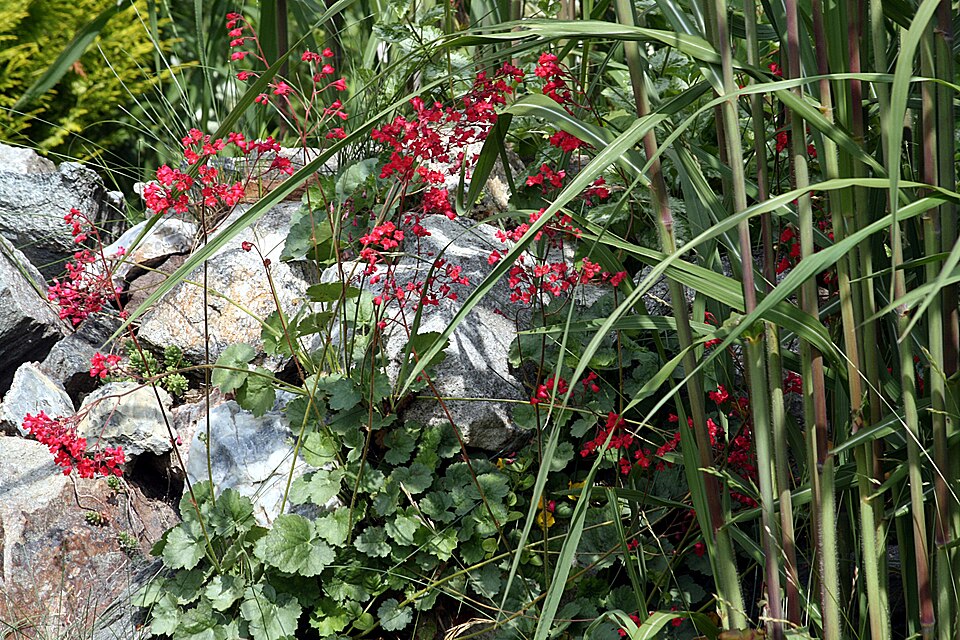
The red flowers of Heuchera sanguinea account for the common name coral bells. Many garden heucheras are grown for foliage, and their leaf color, light requirements and habit vary. Look at the label before using an old planting as the model for a new one. The examination here applies to a clump with an exposed crown or a sudden change in vigor. Work on the plant in front of you, with enough room to see which roots are attached and whether the tissue in the center is still sound.
Get three views without pulling on the crown
Look from above and identify where leaves or new shoots begin. An old summer flower stalk can remain near the center and make the clump look more ragged. Move aside loose leaves without bending the newest shoots. Then look from ground level. Is there a gap under part of the root ball, or does the clump seem to rise on a short, firm older stem? A small crack following the edge of a lifted root ball supports the idea that the ground moved underneath it. An exposed woody neck built up over several seasons points toward a different process.
Use a trowel to open a little soil just beyond the crown if you cannot see the condition of the roots. Keep the blade away from leaves and pull the soil back only enough to see. Firm roots still anchored in the surrounding soil are encouraging. An entire top that rolls loosely when touched and has few intact roots deserves a closer look. In a container, remove the inner pot from an outer cover and check whether it had been standing in water. A wet pot and a heaved plant outdoors can produce broadly similar drooping foliage, though the roots need different care.
Next, make a note about timing. If the crown seemed normal in autumn and several shallow-rooted plants have lifted following periods of freezing and thawing, heaving is plausible. If its sides have gradually become taller for several years and only peripheral leaves are vigorous, age and the shape of the clump may explain it. Sudden collapse while the mix is moist can have several causes. Check the roots and drainage before assuming the plant needs water.
Set a sound, heaved clump back into contact
Wait until the soil is workable. Pressing a frozen clod can break the exposed roots, and walking into a saturated bed can compact the area you are trying to help. Where the plant has only lifted slightly, open a shallow space beside it and settle the root ball gently. If the whole ball is high and rocking, lift it with support underneath and reshape the hole so its roots sit in contact with the soil. Set the crown close to its prior level. Cover the fine roots without burying the growing points.
Water after replanting if the soil is dry enough to take it. A light hand makes the job easier. You want to settle loose soil around the roots without creating a low bowl that collects water over the crown. Check it again after a rain. A clump that sinks into a pocket may have been set into more loose fill than it needed. Bring it back to level while the roots are still easy to move. At ground level, water should be able to leave rather than collecting in the hollow of the leaves.
If you mulch, put a thin layer around the clump and keep it away from the center. A small amount of loose material can protect bare soil without weighing on leaves or trapping dampness around new shoots. Check what happens to the mulch during storms and cleanup. Material that sits exactly where you placed it in a sheltered corner may drift into crowns in a more exposed part of the garden. Move it away when you see it instead of refreshing the entire layer around the base.
Take divisions from a vigorous edge
When the lifted look comes from an old woody center, examine the younger shoots around its edge. A mature clump can sometimes be renewed by taking pieces that have live shoots and roots. Work once active growth begins and weather will allow the pieces to establish, often in late spring for a temperate garden. Do it because you have a weak center or need to make the planting smaller. A healthy compact clump with new growth and covered roots can stay in place for another season.
Lift the plant and find a healthy section where several leaves arise from living tissue with roots attached. Divide with clean, sharp tools, and retain a usable amount of root on each planned piece. Discard material that is clearly dead or decayed. Set each division at the same depth it had in the parent plant, with its crown at soil level and its roots covered. Keep the soil lightly moist as the divisions grow into it. Do not set them into a site where you know regular watering will be difficult during their first warm spell.
Use the opportunity to compare the color of leaves in different parts of the bed. A red-flowering green-leaved species may tolerate light differently from a particularly pale cultivar. Move a division only after you have considered soil, drainage and the sun at the warmest part of the day. The new clump will become harder to move once it is established. A place sheltered from strong afternoon sun can be a sensible trial in hot conditions, especially if it receives enough light during the earlier part of the day.
Inspect a collapsing pot separately
An actively declining container heuchera that comes away from its roots needs careful inspection. In places where vine weevil occurs, look for root damage and pale curved larvae in the growing medium. Notches along the leaf edges can be associated with adult feeding, while the loss of roots is principally a problem from the larvae. Either clue on its own warrants a closer look. Ask a local horticulture service if you need help identifying what you find and choosing an appropriate response. Keep suspect plants and loose mix away from other containers while you inspect them.
If the roots smell sour and the inner pot has spent part of winter standing in water, check the drainage and material around the roots. Discolored tissue and collapse can have several causes. Look at the whole plant and container, including blocked holes, a wet central pocket or an overly large volume of mix for the remaining roots. An emergency move is most useful when it corrects a condition you can identify. Repeatedly soaking a wilted plant before inspecting it may make a wet-root problem worse.
When several plants in the same batch decline, record where they stood and when the changes began. One low shelf may have stayed wet much longer than the others after rain. A group bought at the same time may have arrived with a problem that was hard to see. Identify the cause before moving soil or plants to new parts of the garden. If a nearby clump stays firm and rooted, that contrast gives you something to compare directly in better light.
Where only one side of a clump has heaved, compare the soil on both sides. An exposed edge may be looser or wetter than the protected one. Refill voids and check the whole perimeter before you return the mulch.
Follow the first new leaves
Check the reset clump a few weeks later. New leaves from a firm crown, together with roots that no longer show at the edge, suggest the plant is settling. An older leaf may remain torn or flattened after winter. Judge the new growth that forms in the adjusted conditions. If the crown lifts repeatedly in the same place, review drainage and exposure and compare it with a slightly higher or more sheltered position before filling the area with new plants.
Keep access to the edge of the clump through the year. Remove ruined foliage when it gets in the way of inspection, working carefully around young leaves. Leave useful healthy growth unless the plant needs a particular seasonal cleanup. Next spring, look from the same spot before making the first cut or bringing out the trowel. Once you can tell which roots are exposed and why, a coral bells clump often needs less disruption than its appearance initially suggests.
Further reading: Royal Horticultural Society guide to growing heucheras.